Greece has become one of the most important real estate growth markets in Southern Europe, supported by tourism expansion, urban regeneration, infrastructure investment, foreign buyer demand, and the repositioning of the country after years of post-crisis recovery. However, capital growth in Greece is not evenly distributed. The strongest opportunities are not simply found by choosing the cheapest location or the most famous island. They are found in areas where demand is expanding, infrastructure is improving, supply is limited, and future resale depth is strong.
Recent Bank of Greece data confirms that apartment prices continued to rise across the country in 2025. For the full year, prices increased by 6.2% in Athens, 9.6% in Thessaloniki, and 9.8% in other cities. This shows an important shift: Athens remains the deepest and most liquid market, but some regional cities and secondary locations are now showing stronger percentage growth.
What Drives Capital Growth in Greece
Capital growth in Greece is shaped by several factors working together. The most important drivers are infrastructure development, tourism performance, urban regeneration, international buyer interest, rental-market depth, supply constraints, and long-term lifestyle demand.
Tourism remains one of the strongest macro drivers. Greece generated approximately €23.6 billion in travel receipts in 2025, a 9.4% increase compared with 2024, according to Bank of Greece data reported in 2026. This matters for property investors because tourism supports rental demand, hospitality investment, second-home demand, and broader confidence in coastal and island markets.
At the same time, investors must avoid simplistic thinking. Tourism alone does not guarantee capital growth. A property in a tourist area can still be weak if the location has poor accessibility, limited resale demand, weak building quality, seasonal vacancy, or unrealistic pricing. Strong capital growth usually requires both demand and liquidity.
Athens: Liquidity, Regeneration, and Long-Term Demand
Athens remains the most liquid real estate market in Greece. It has the largest population base, the strongest rental market, the deepest resale market, and the highest level of international visibility. For capital growth, Athens is important because it offers multiple buyer groups: local residents, foreign investors, relocation buyers, students, professionals, and long-term rental investors.
The strongest capital growth areas in Athens are usually not random low-cost districts. They are areas connected to regeneration, transport access, lifestyle demand, and rental depth. Well-connected central neighbourhoods, districts close to metro lines, and areas benefiting from urban renewal can offer stronger appreciation potential than already-overpriced prime locations.
Athens is also attractive because it is less seasonal than island markets. A well-selected apartment in Athens can appeal to tenants and buyers throughout the year, which supports both rental income and exit liquidity. For investors seeking balanced capital growth, Athens remains one of the safest entry points in Greece.
Athens Riviera: Premium Growth and Scarcity Value
The Athens Riviera is one of the most important premium capital growth corridors in Greece. Stretching along the southern coastline of Athens, it combines city access, coastal lifestyle, luxury development, marina upgrades, international buyer demand, and limited coastal land supply.
The Ellinikon project is the main catalyst behind the transformation of the area. It is one of Europe’s largest urban regeneration projects and is reshaping the positioning of Athens as a Mediterranean lifestyle and investment destination. The wider Riviera benefits from this because buyers increasingly view the southern coast not only as a leisure area but as a long-term prime residential market.
For investors, the Athens Riviera is not usually a high-yield play. Entry prices are higher, and rental yield percentages may be lower than in smaller urban apartments. Its strength is capital preservation, long-term appreciation, scarcity, and international resale appeal. It is better suited for investors seeking premium positioning rather than purely income-focused returns.
Thessaloniki: Strong Percentage Growth and Infrastructure Momentum
Thessaloniki is one of the strongest capital growth stories in Greece. Bank of Greece data showed apartment prices in Thessaloniki increasing by 9.6% in 2025, outperforming Athens on an annual basis. This reflects growing investor interest, a lower pricing base, improving infrastructure, and stronger recognition of the city as a regional economic and lifestyle hub.
The completion and opening of Thessaloniki’s metro system in late 2024 marked a major infrastructure milestone for the city. Improved urban mobility can support property values by making more neighbourhoods accessible and increasing the attractiveness of areas connected to transport corridors.
Thessaloniki also benefits from a large student population, business activity, technology-sector growth, Balkan connectivity, and lower average prices compared with Athens. For investors seeking capital growth from a lower entry base, Thessaloniki deserves serious consideration.
However, not every district in Thessaloniki will perform equally. The strongest areas are usually those close to universities, business zones, transport links, waterfront regeneration, and established residential demand. Buying simply because the city is growing is not enough. The asset must still have tenant demand, building quality, and resale liquidity.
Piraeus: Port-Led Regeneration and Urban Repricing
Piraeus is increasingly relevant as a capital growth area because it combines port activity, metro connectivity, tourism flows, shipping-related business demand, and urban regeneration. As Greece’s main port city and a gateway to the islands, Piraeus benefits from both infrastructure and tourism-linked demand.
The investment logic in Piraeus is different from central Athens or the Riviera. It is not purely a premium lifestyle market. It is a regeneration and connectivity market. Areas close to transport, port infrastructure, renovated buildings, and improving urban zones may see stronger repricing over time.
Piraeus can be attractive for investors who want lower entry pricing compared with prime Athens while still remaining connected to the wider capital region. The risk is that growth is uneven. Investors must separate genuinely improving micro-locations from weaker streets or older building stock with limited resale appeal.
Crete: Tourism Depth, Airport Expansion, and Island Liquidity
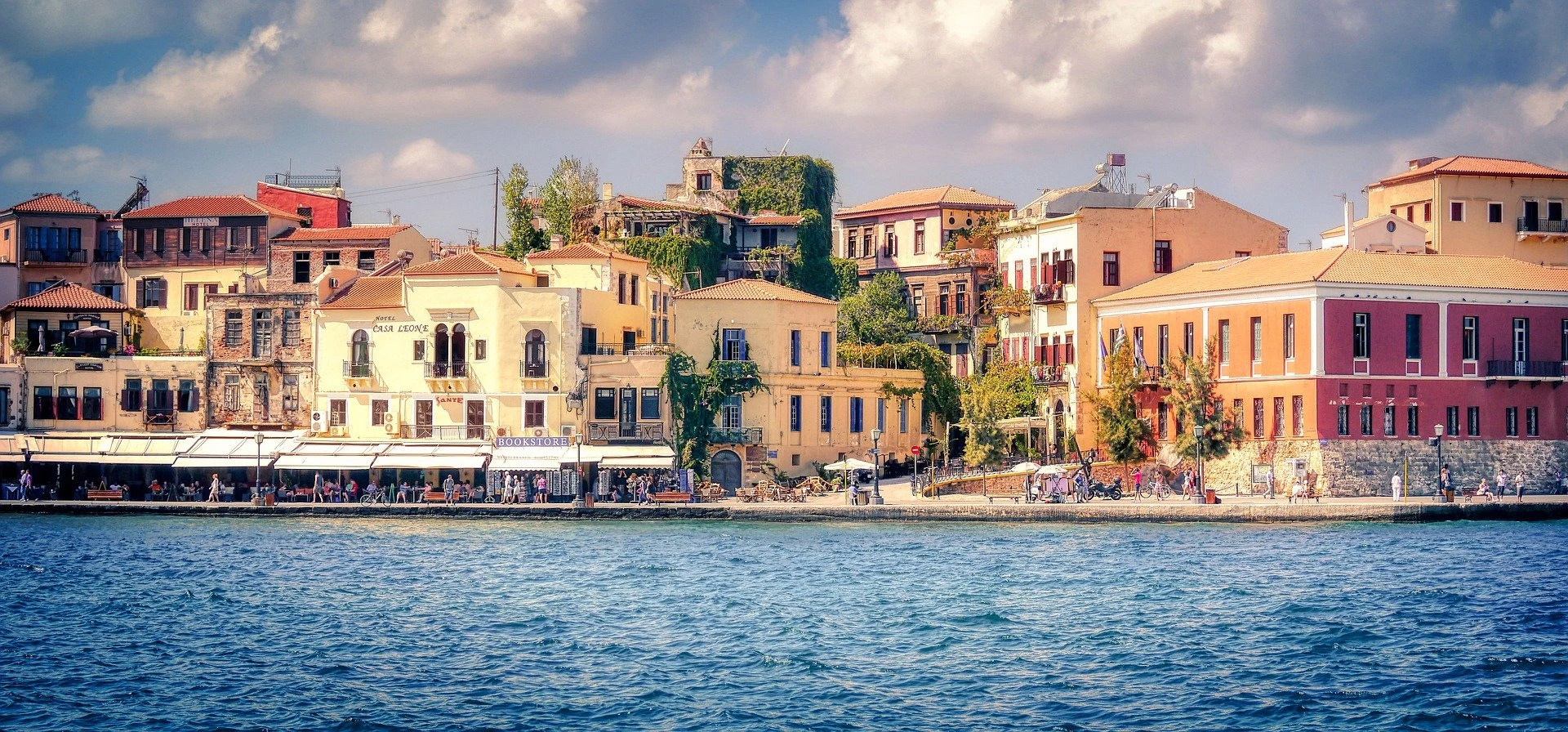
Crete is one of Greece’s strongest island markets because it has more depth than many smaller islands. It is not only a seasonal luxury destination; it has major cities, universities, hospitals, infrastructure, agriculture, tourism, and a large year-round population. This gives Crete stronger liquidity and broader demand than many purely seasonal island markets.
Tourism is a major growth driver. Crete was expected to exceed 5.6 million international air arrivals in 2025, confirming its role as one of Greece’s most important travel destinations. The planned new Heraklion airport at Kastelli is also expected to significantly improve capacity and long-term connectivity, supporting the island’s investment case.
For capital growth, Crete offers a strong combination of tourism demand, lifestyle appeal, infrastructure expansion, and year-round usability. The strongest opportunities are usually found in areas with good access to airports, beaches, cities, and established rental demand.
The main risk is overpaying for purely tourist-facing properties with limited off-season appeal. Investors should prioritise assets that can attract both lifestyle buyers and rental users, not only peak-summer tourists.
The Peloponnese: Lifestyle Growth and Better Entry Value
The Peloponnese is becoming more interesting for investors looking for lifestyle-driven capital growth without the extreme pricing of prime islands or the Athens Riviera. It offers coastal towns, improving road access, historical appeal, tourism demand, and better entry value in many areas.
Compared with Mykonos or Santorini, the Peloponnese is generally less speculative and less globally branded. This can be an advantage for investors seeking earlier-stage growth rather than fully priced luxury markets. The buyer profile includes lifestyle buyers, retirees, holiday-home investors, and long-term Mediterranean property buyers.
The strongest locations are usually those with good road access, coastal appeal, quality developments, and proximity to established tourism routes. However, liquidity can vary significantly. Investors should be selective and avoid remote locations with weak resale depth.
Ionian Islands: International Demand and Lifestyle Resilience
The Ionian Islands, including Corfu, Lefkada, Zakynthos, and Kefalonia, continue to attract international buyers seeking holiday homes, lifestyle properties, and rental assets. Recent market commentary has highlighted Crete, the Peloponnese, and the Ionian Islands as major hotspots for foreign holiday-home demand in 2026.
The capital growth case in the Ionian Islands is based on lifestyle scarcity, international buyer interest, tourism appeal, and limited prime coastal supply. These markets can perform well when properties are located near beaches, marinas, old towns, airports, or established holiday zones.
However, investors must understand that island markets are not always liquid. Selling a villa or holiday home can take longer than selling a well-priced apartment in Athens or Thessaloniki. For this reason, the strongest island investments are usually those with clear differentiation: sea views, access, build quality, rental management, and strong location fundamentals.
Mykonos and Santorini: Prime Scarcity, but Not Always Best Entry
Mykonos and Santorini remain among Greece’s most internationally recognised luxury markets. Their capital growth logic is based on global visibility, limited supply, premium tourism demand, and scarcity. These markets are attractive for high-net-worth investors seeking prestige and long-term asset preservation.
However, they are not automatically the best markets for every investor. Entry prices are high, yields can be compressed, operational costs are significant, and buyer liquidity is narrower because the market is more luxury-oriented.
For capital growth, Mykonos and Santorini make sense when the property is truly prime, legally clean, well-managed, and positioned for international resale. Buying an average property in an expensive island market is weak strategy. The asset must justify its premium.
Secondary Cities: Higher Growth Potential from a Lower Base
Bank of Greece data shows that “other cities” recorded 9.8% annual apartment price growth in 2025, slightly higher than Thessaloniki and well above Athens. This confirms that capital growth opportunities are expanding beyond the two largest urban centres.
Secondary cities can offer attractive growth where there is a combination of lower entry pricing, real tenant demand, university activity, tourism, infrastructure improvements, and limited modern housing supply. These markets may outperform mature prime areas in percentage terms because they start from a lower price base.
However, secondary cities require careful analysis. Liquidity is thinner, resale demand may be more localised, and poor asset selection can trap investors in low-demand buildings. The opportunity is real, but the margin for error is higher.
How to Choose a Capital Growth Area
The strongest capital growth areas in Greece usually share several characteristics. They have improving infrastructure, clear demand drivers, limited quality supply, strong rental logic, and multiple exit buyer groups. Areas that depend only on one demand source, such as short-term tourism, carry more risk.
Investors should also compare yield and appreciation. A high-growth area may not always produce the highest rental yield. A strong income property may not always appreciate the fastest. The correct strategy depends on whether the investor prioritises cash flow, resale growth, lifestyle use, Golden Visa planning, or long-term asset preservation.
The weakest approach is chasing headlines. Yox — “Athens is growing” or “Crete is popular” is not enough. Capital growth comes from buying the right asset in the right micro-location at the right price, with a realistic exit strategy.