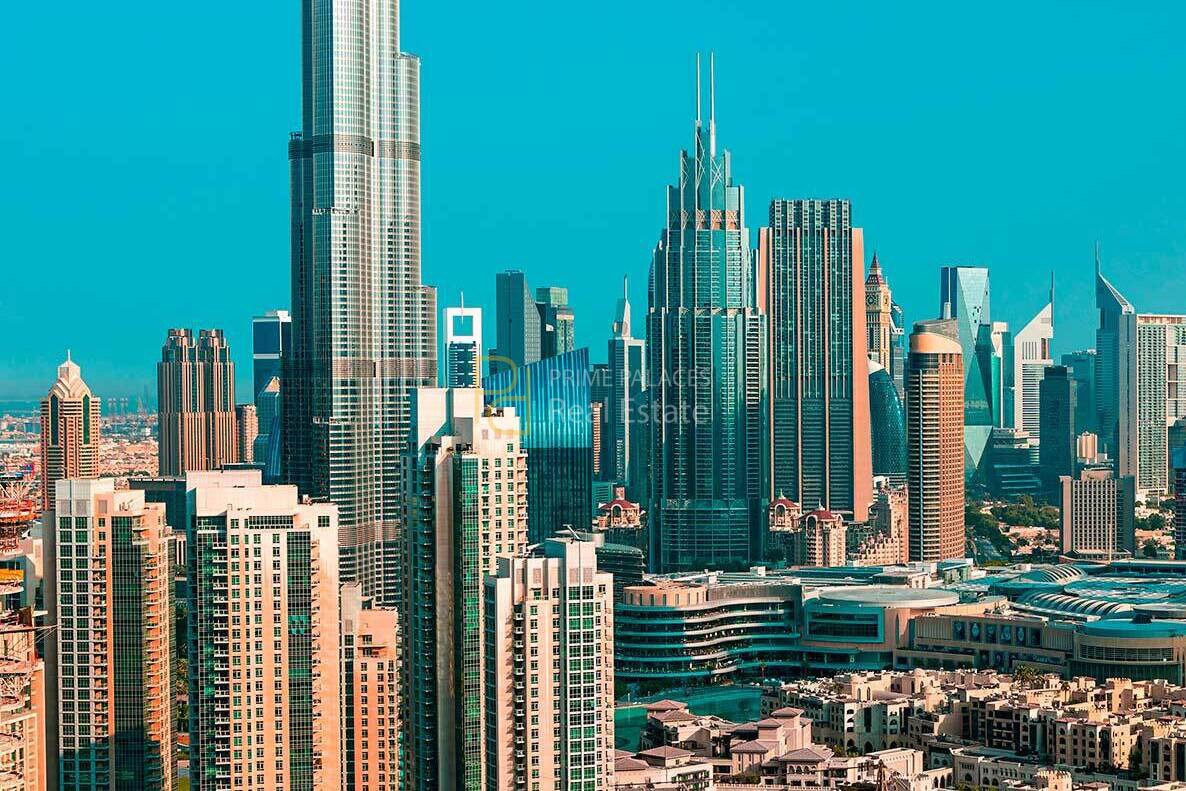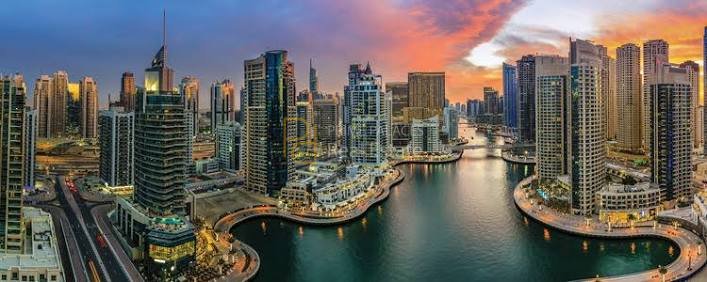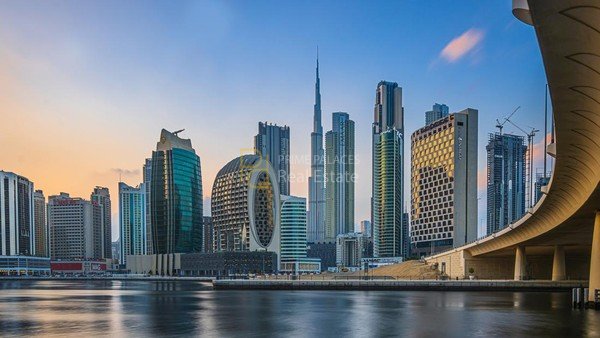






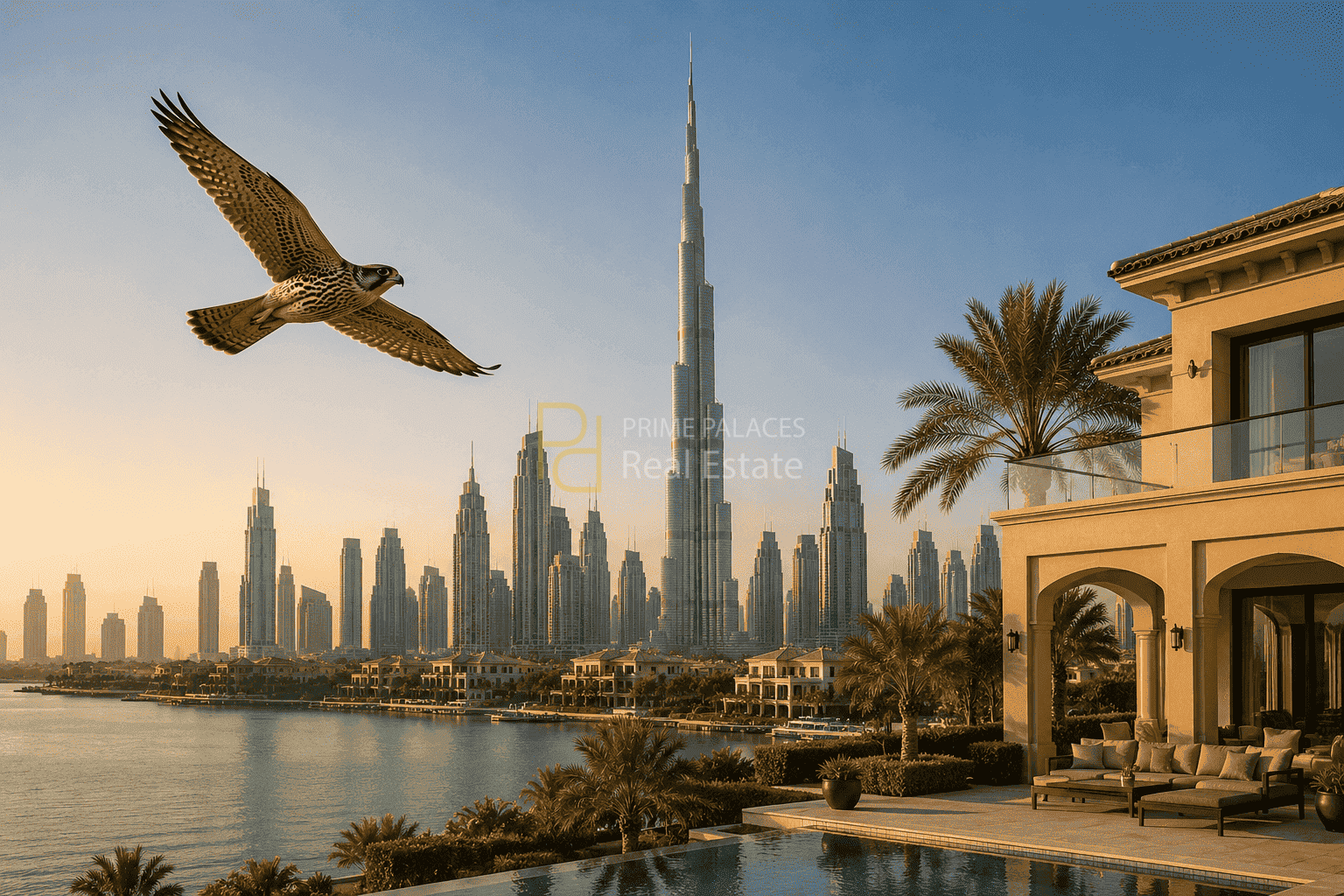
Location Is the New Luxury: Inside Dubai's Two-Speed Villa Market
For a few years, almost everything in Dubai's property market went up together. That has changed. In 2026 the market has clearly picked favourites, and luxury villas in established communities are firmly among them. Meanwhile, newer areas with a lot of fresh apartment supply are working much harder to hold their prices. The simplest way to put it is that where you buy now matters far more than it used to. Below, we look at what's driving that, and what it means if you're thinking about buying.
A quick note. This is market commentary rather than investment advice. Property values can go down as well as up, forecasts are only ever estimates, and every outcome depends on the specific home, the timing, and the community. Please do your own research and speak to a professional before you buy.
The Market Has Split in Two
Analysts have started calling Dubai a "two-speed market," and it's an accurate description. Firms like Knight Frank and Cushman & Wakefield are pointing to the same thing: prime villa communities keep posting strong gains, while apartment-heavy and high-supply areas grow much more slowly, and occasionally slip back a little.
This isn't a downturn. The market is simply growing up. After several years of unusually fast appreciation, prices are settling into a calmer, more selective pattern. The question buyers ask has shifted too. It used to be "is Dubai property going up?" Now it's "which Dubai property is going up?"
Villas Are Winning, and the Gap Is Widening
The split between villas and apartments has become one of the clearest features of the 2026 market. Recent figures show villa values climbing roughly 8 to 10 percent year on year, while apartments have barely moved in some measures, gaining under 1 percent. You can see the divide in the index numbers themselves: one widely used measure puts villas at around 301 against roughly 172 for apartments, and that distance keeps growing.
The detail backs it up. The median villa resale price now sits at about AED 4.3 million, up around 16 percent on the year, and established freehold villa communities are priced roughly 196 percent above where they were just after the pandemic. That's about 80 percent above the old 2014 peak. Villas have stayed ahead of apartments every year since 2023.
It's worth being straight about the short term, though. On a month-to-month basis in early 2026, even villas eased off slightly as the market paused for breath. The yearly picture is clearly up, while the very latest few months look flatter. That's normal for a market that's maturing and becoming choosier.
Why Location Became the Dealmaker
The reason established communities keep leading comes down to one stubborn fact. You can't build a brand new freehold villa community on land that doesn't exist. Prime villa land in Dubai is genuinely scarce, and that scarcity isn't going anywhere.
Apartments tell the opposite story. Most of Dubai's new supply is vertical, with roughly 85 percent of forecast new homes being apartments and only about 14 percent villas. As tens of thousands of new units arrive, apartments in newer, denser districts have to compete harder for buyers and tenants, and that holds their prices back. Villas in mature, low-density communities just don't face the same pressure.
Add in what people actually want today, which is space, privacy, a garden, good schools nearby and infrastructure that already works, and you end up with a market decided by two things: how tight the supply is, and how established the location is. Communities with limited stock and proven infrastructure keep winning. Areas with rising inventory increasingly have to compete on price.
Where the Money Is Going
The top performers in 2026 are almost all established prime enclaves. Some of the strongest annual villa gains have come from communities like Jumeirah Islands, The Meadows and Emirates Hills, the last of which is Dubai's most prestigious gated address. Famous waterfront names like Palm Jumeirah are still drawing serious money, although gains there are more modest now, coming off an already high base, with plenty of owners choosing to hold rather than sell.
At the very top of the market, demand is striking. Dubai was the world's number one market for homes priced above 10 million US dollars in 2025, with around 500 of those sales. High-value villa deals above AED 30 million, several of them past AED 50 million, have clustered in Palm Jumeirah, Dubai Hills Estate and DIFC. Record super-prime sales in Emirates Hills, Palm Jumeirah and Jumeirah Bay Island have reached into the hundreds of millions of dirhams.
The contrast fills in the rest of the picture. While prime villas surged, a few non-prime villa pockets saw values dip, and even some prime apartment locations softened. Same city, very different results.
The Numbers at a Glance
| Leading villa community | Recent annual gain (approx.) | Why it leads |
|---|---|---|
| Jumeirah Islands | ~24% | Low-density, very tight supply |
| The Meadows | ~15% | Mature, family-focused, limited stock |
| Emirates Hills | ~15% | Dubai's most prestigious gated villas |
| Palm Jumeirah | Modest (high base) | Iconic waterfront, held long term |
Figures are approximate, drawn from 2026 market reviews, and reflect a point in time. Past performance is not a guarantee of future results.
Why the World's Wealthy Keep Choosing Dubai
The demand underneath all of this is truly global. International buyers made up well over half of transactions, with strong inflows of wealthy individuals, including a notable wave of British buyers moving over after tax changes back home. The market is also mostly cash-driven, with cash making up the large majority of deals, which adds stability and takes a lot of the leverage risk out of the picture compared with other big cities.
The value on offer is hard to argue with. A luxury Dubai villa can cost a fraction of what an equivalent home would in cities like Hong Kong or London, and it comes with no income tax, no capital gains tax, and a dirham pegged to the US dollar, which removes currency risk for dollar-based buyers. For global wealth looking for a stable, liquid and tax-efficient home, Dubai increasingly looks like a serious long-term asset rather than just a nice place to own a holiday home.
From Villa to Visa: The Residency Angle
For a lot of international buyers, there's a second benefit sitting alongside the property itself. A qualifying real estate investment of AED 2 million or more makes you eligible for the UAE Golden Visa, which is long-term, renewable residency for you and your family, with no need to move your business or change your life elsewhere.
That shifts the whole calculation. A villa in an established community isn't only a capital-growth play in a supply-starved part of the market. It can also be the foundation of a UAE residency plan. For families who move around the world, pairing a real, appreciating asset with a decade of residency security is the kind of thing worth planning on purpose, rather than discovering by accident.
What Could Change This
No market moves in a straight line, and a level-headed view matters here. That large apartment supply pipeline could keep weighing on the lower and mid parts of the market. The overall pace of growth is clearly slowing. Some forecasters expect prime gains of only a few percent in 2026, others are more optimistic about villas specifically, and honestly, nobody knows for certain. Short-term monthly softening has already shown up. And as a globally connected market, Dubai isn't immune to wider economic or regional shocks. None of this points to a crash, and the fundamentals remain strong, but it's a good reason to buy carefully, in the right community, with a long time horizon in mind.
Conclusion
Dubai's 2026 market is really a story about divergence. Luxury villas in established, supply-starved communities are leading again, their lead over apartments is widening, and location has become the single biggest factor in whether a property gains value. Add in the UAE's tax advantages and the Golden Visa route, and a well-chosen villa starts to look like both an asset and a residency plan, as long as you buy in the right place and think long term.