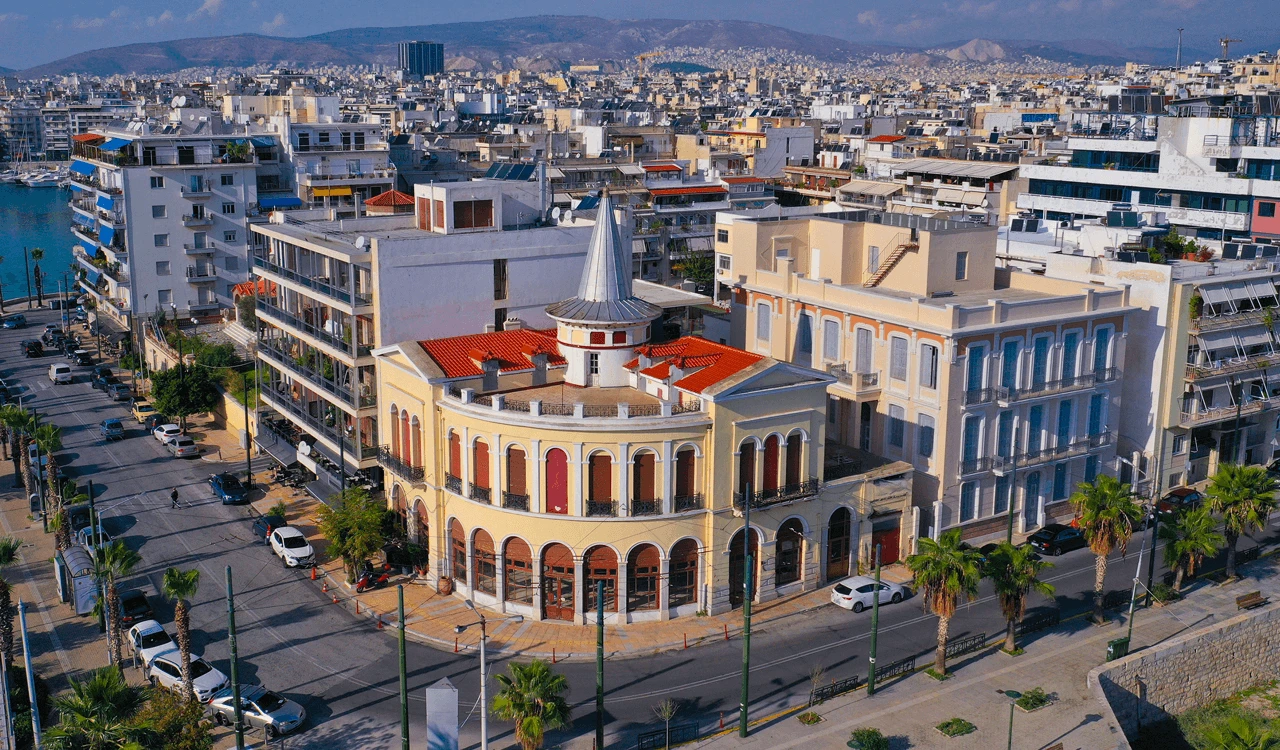
Investment Comparison in Greece Real Estate
The Greek real estate market has evolved into one of Southern Europe’s most closely watched investment environments, driven by tourism growth, urban regeneration, infrastructure upgrades, international buyer demand, and increasing relocation interest from foreign investors. However, Greece should not be viewed as a single investment market. Residential apartments in Athens, redevelopment projects in Thessaloniki, coastal villas, island properties, commercial assets, and hospitality investments all operate under completely different market dynamics.
Rental yields, liquidity, appreciation potential, operating complexity, and long-term risk vary significantly depending on the asset type and location. A professional investment analysis in Greece is not based only on purchase price or residency eligibility. It must evaluate demand depth, tenant profile, area development potential, resale liquidity, operating costs, and long-term market positioning.
Recent market data continues to show positive price growth across the Greek residential sector, although growth rates differ substantially between regions. While Athens remains the country’s most liquid and internationally recognised property market, Thessaloniki and several secondary regions have demonstrated stronger percentage growth during recent reporting periods, reflecting the expansion of investor interest beyond the capital.
Investment Threshold Comparison
One of the most important aspects of the Greek market today is the distinction between different investment thresholds and the type of real estate typically associated with each category.
The €250,000 category is now primarily connected to commercial-to-residential conversions, redevelopment projects, and restoration of listed historical buildings. These investments generally target regeneration opportunities in urban districts where older buildings are being transformed into modern residential units. The main advantage of this category is lower capital entry, allowing investors to access the Greek market with reduced initial exposure. In carefully selected projects, this segment can produce attractive rental yields due to growing demand from students, professionals, digital nomads, and medium-term tenants.
However, lower entry price does not automatically mean stronger investment quality. Many lower-priced assets remain inexpensive because of structural issues such as weak surrounding demand, aging infrastructure, oversupply, or limited long-term liquidity. The success of redevelopment investments depends heavily on developer credibility, permit structure, construction quality, and the future attractiveness of the district itself. This category is generally most suitable for investors focused on yield efficiency, urban regeneration opportunities, and lower-ticket European market exposure.
The €400,000 category represents what many investors consider the most balanced segment of the Greek real estate market. At this level, buyers often gain access to modern residential developments, coastal residences, lifestyle-oriented apartments, and family-focused properties outside ultra-prime districts. Compared to many Western European cities, €400,000 in Greece can still secure relatively high-quality real estate in desirable locations.
This segment balances rental potential, capital growth, lifestyle usability, and long-term liquidity more effectively than many lower-entry investments. Secondary cities, selected coastal areas, and growth districts often provide stronger value-per-square-meter while benefiting from infrastructure improvements, tourism expansion, airport connectivity, and increasing international demand. The €400,000 category is usually most appropriate for balanced investors seeking both appreciation and practical rental performance.
The €800,000 category applies primarily to Greece’s strongest and most internationally demanded markets, including prime Athens districts, Thessaloniki premium zones, Mykonos, Santorini, and major island destinations. This segment focuses more heavily on prestige positioning, asset preservation, international demand resilience, and long-term scarcity value.
The major advantage of prime-market investments is stronger global visibility and better resilience during economic fluctuations. Prime locations generally maintain stronger long-term buyer demand because supply remains limited while international interest continues to grow. However, luxury properties do not always produce the strongest rental yields. In many cases, high-end villas and ultra-prime residences generate lower percentage returns relative to purchase price, particularly when compared to smaller urban residential units.
For example, a luxury villa in Mykonos may produce substantial seasonal income during peak tourism periods, but occupancy outside the tourist season may become less predictable. Meanwhile, a smaller apartment in Athens may generate more stable year-round occupancy with lower operating complexity. The €800,000 category is therefore most suitable for high-net-worth investors prioritising lifestyle positioning, wealth preservation, and long-term premium asset ownership rather than purely yield-driven strategies.
Residential vs Commercial Real Estate
Residential and commercial real estate investments in Greece operate under fundamentally different market structures.
Residential property remains the dominant choice for international investors because it is generally easier to understand, finance, manage, and resell. Demand for residential units is supported by tourism, urban migration, relocation demand, international students, remote workers, and local housing needs. Apartments in major cities such as Athens and Thessaloniki often benefit from broader tenant demand and stronger liquidity compared to more specialised asset classes.
Residential assets also provide greater flexibility. Investors may choose between long-term rental strategies, medium-term leasing, lifestyle usage, or selected short-term rental operations depending on local regulations and market conditions. However, investors must avoid unrealistic assumptions regarding short-term rental income. Greece has introduced tighter controls and stronger compliance requirements in several heavily saturated tourism areas, meaning that not every property should automatically be viewed as an Airbnb-style investment.
Commercial real estate includes offices, retail units, hotels, mixed-use buildings, logistics facilities, and hospitality assets. Commercial properties may produce stronger yields than standard residential assets, particularly when supported by long-term lease structures and stable tenant contracts. Logistics and office assets in selected districts have attracted increasing investor attention due to business expansion and supply limitations in certain segments.
At the same time, commercial investments involve greater operational complexity, vacancy exposure, economic-cycle sensitivity, and tenant concentration risk. Commercial assets are usually more appropriate for experienced investors who understand lease structures, operational management, and sector-specific market risks.
Athens vs Thessaloniki vs Islands vs Coastal Regions
Athens remains Greece’s largest and most liquid real estate market. The city benefits from strong infrastructure, international visibility, transportation connectivity, tourism, business activity, and ongoing urban regeneration. Athens is particularly attractive for investors seeking year-round rental demand, professional tenants, and long-term liquidity.
Thessaloniki has emerged as one of the country’s strongest growth stories. The city benefits from a large student population, improving infrastructure, increasing international attention, and a lower pricing base compared to Athens. Many investors view Thessaloniki as a market with stronger percentage growth potential and more efficient entry pricing.
Greek islands operate under a different investment dynamic. Locations such as Mykonos and Santorini are driven primarily by tourism, international lifestyle demand, and luxury positioning. These markets offer strong seasonal pricing and global recognition but are more dependent on tourism cycles and seasonal occupancy patterns.
Coastal mainland regions often provide a middle ground between urban and island investment. These areas combine lifestyle appeal, tourism exposure, stronger year-round accessibility, and lower operational complexity than island properties. Coastal mainland investments increasingly attract relocation buyers, retirees, remote workers, and lifestyle-focused investors.
Rental Yield vs Capital Growth
One of the most important distinctions in real estate investing is the difference between rental yield and capital appreciation.
High-yield assets are not always the strongest long-term appreciation opportunities, while premium luxury assets may generate lower annual returns but stronger long-term value preservation. Smaller urban apartments may produce more stable occupancy and stronger yield percentages, while luxury villas and prime coastal assets often depend more heavily on long-term appreciation and scarcity value.
Tourism-driven properties can generate strong peak-season income but may also experience seasonal volatility. Commercial assets may provide stronger cash flow under stable leases but involve greater operational and economic risk.
A strong investment strategy balances rental performance, appreciation potential, liquidity, operating complexity, tenant stability, and long-term resale positioning rather than focusing on a single metric alone.
Taxation and Ownership Costs
Property acquisition and ownership costs also play a major role in overall investment performance. Investors in Greece must account for transfer taxes, legal fees, registration expenses, annual property taxation, maintenance costs, and management expenses when evaluating net return.
Professional investment analysis focuses on realistic net operating performance rather than advertised gross rental figures. Occupancy assumptions, operating costs, taxation, management efficiency, and long-term liquidity all directly affect actual investment outcome.
Prime Palaces Real Estate – Investment Guidance in Greece
At Prime Palaces Real Estate, we work with reputable Greek developers, verified projects, residential and commercial opportunities, redevelopment assets, and premium coastal investments across different regions of Greece.
Our role extends beyond property presentation. We assist clients from the earliest stages of investment planning through market comparison, property selection, developer evaluation, legal coordination, transaction support, rental strategy analysis, and residency guidance where applicable.
The objective is not simply to purchase property. The objective is to structure a real investment decision based on market fundamentals, long-term positioning, and realistic financial logic.