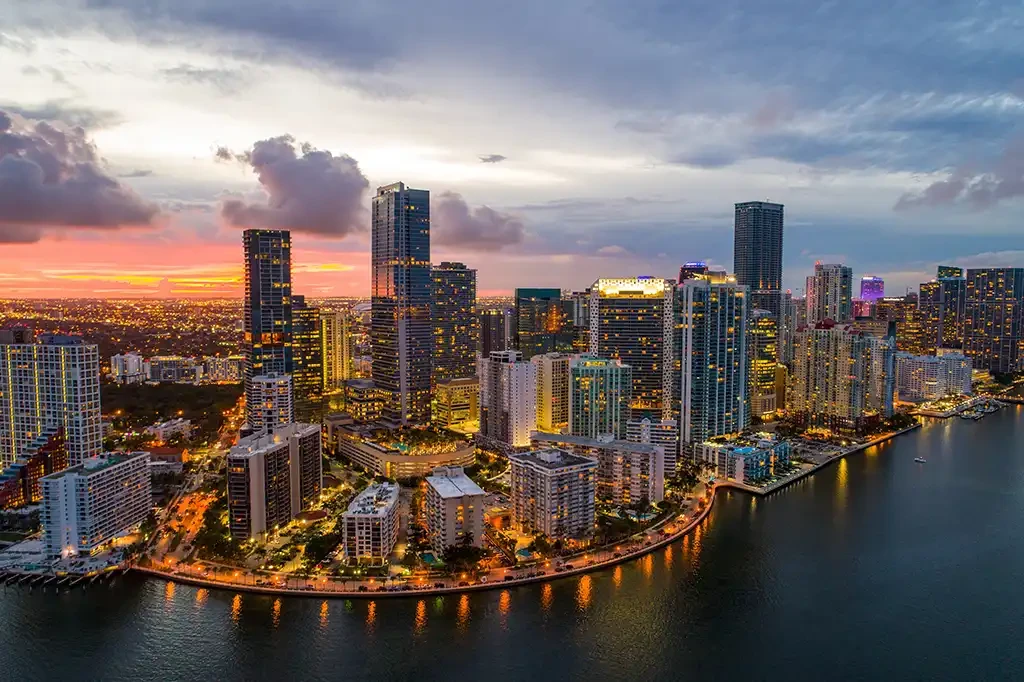
Miamida ko'chmasini sotib olish shaffof huquqiy tizimga amal qiladi, lekin jarayon, xarajat tuzilmasi va investitsiya mantiqi Yevropa bozorlaridan sezilarli darajada farq qiladi. Xalqaro investorlar uchun asosiy jihat - bu kirish emas, balki tranzaksiyaning qanday tuzilishi, moliyalashtirilishi va mahalliy bozor tsikliga qanday joylashtirilganidir.
Miamining bozori juda segmentlangan. Brickell va Downtown yuqori zichlikdagi, investorlar tomonidan boshqariladigan shahar zonalari sifatida faoliyat yuritadi; Miami Beach va Sunny Isles turmush tarzi va qisqa muddatli ijaraga berish bozorlariga aylanishadi; Edgewater va Midtown yangi rivojlanish ta'minoti bilan o'sish koridorlari sifatida joylashgan. Har bir segmentda turli kirish narxlari, ijaraga berish dinamikasi va qayta sotish likvidligi mavjud bo'lib, bu investitsiya natijalariga bevosita ta'sir qiladi.
Olish jarayoni odatda ko'chmas tanlash va narxni muzokara qilish bilan boshlanadi, keyin sotib olish shartnomasini imzolash va depozit qo'yish amalga oshiriladi, odatda sotib olish narxining 10% atrofida. Rejalashtirilmagan ko'chmaslar uchun tuzilma boshqacha bo'lib, ko'pincha qurilish davomida bosqichma-bosqich to'lovlarni o'z ichiga oladi. Mualliflik huquqini tasdiqlash va huquqiy tekshiruvlar notarius tizimi o'rniga mualliflik kompaniyasi orqali amalga oshiriladi, bu esa Yevropaga nisbatan muhim tuzilmaviy farqdir.
Xorijiy xaridorlar Miamida ko'chmasini sotib olishda cheklovlarsiz harakat qilishlari mumkin, lekin tranzaksiyalar AQShning tartibga solish va soliq tizimlariga muvofiq bo'lishi kerak. Mulk shaxsiy nom ostida yoki LLC kabi huquqiy tashkilot orqali tuzilishi mumkin, bu soliq strategiyasi, javobgarlikni himoya qilish va uzoq muddatli saqlash rejalariga bog'liq. Ushbu qaror olishdan oldin qabul qilinishi kerak, chunki keyinchalik qayta tuzish qo'shimcha xarajatlarga olib kelishi mumkin.
Tranzaksiya xarajatlari investitsiya hisob-kitobining muhim qismidir. Miamida, xaridorlar odatda sotib olish narxining taxminan 2% dan 5% gacha bo'lgan yopilish xarajatlarini to'laydilar. Bunga mualliflik sug'urtasi, huquqiy to'lovlar va ma'muriy xarajatlar kiradi. Ko'chmas soliq doimiy xarajat bo'lib, okrugga qarab farq qiladi, odatda baholangan qiymatga qarab 1.5% dan 2% gacha bo'ladi.
Xorijiy investorlar uchun moliyalashtirish mavjud, lekin AQSh rezidentlariga nisbatan cheklovliroq. Qarzga nisbatan qiymat ko'rsatkichlari odatda pastroq, foiz stavkalari yuqoriroq va hujjat talablarida qat'iyroqdir. Natijada, ko'plab xalqaro xaridorlar naqd pul asosida harakat qilishadi, ayniqsa rejalashtirilmagan rivojlanishlarda, bu erda ishlab chiqaruvchi tomonidan boshqariladigan to'lov rejalari keng tarqalgan.
Investitsiya nuqtai nazaridan, Miami aholi oqimi, biznesni ko'chirish va xalqaro kapital tomonidan boshqariladigan kuchli talab asoslarini taklif etadi. Ijara talabi uzoq muddatli yashovchilar va qisqa muddatli mehmonlar tomonidan qo'llab-quvvatlanadi, garchi qisqa muddatli ijaraga berish qoidalari binoga va zonalarga qarab farq qiladi. Investorlar ko'chmasning qisqa muddatli ijaraga berilishiga ruxsat berilishini tekshirishlari kerak, chunki bu bevosita rentabellik strategiyasiga ta'sir qiladi.
Xatar omillari ba'zi segmentlarda, ayniqsa kondominium bozorida, ortiqcha ta'minot, foiz stavkalari tsikllariga sezgirlik va HOA to'lovlari va zaxira talablariga bog'liq binoga xos omillarni o'z ichiga oladi. Qaytishlar mikro-joylashuv, bino sifati va kirish vaqtiga juda bog'liq.
Amaliy jihatdan, Miamida ko'chmasini sotib olish kirish haqida emas, balki bitimni to'g'ri tuzish va bozorning to'g'ri segmentini tanlash haqida. Faqatgina turmush tarzi xaridi sifatida yondashadigan investorlar ko'pincha past natijalarga erishadilar, o'z navbatida, xaridni talab harakatlari va chiqish strategiyasi bilan moslashtirganlar yanada barqaror natijalarga erishadilar.