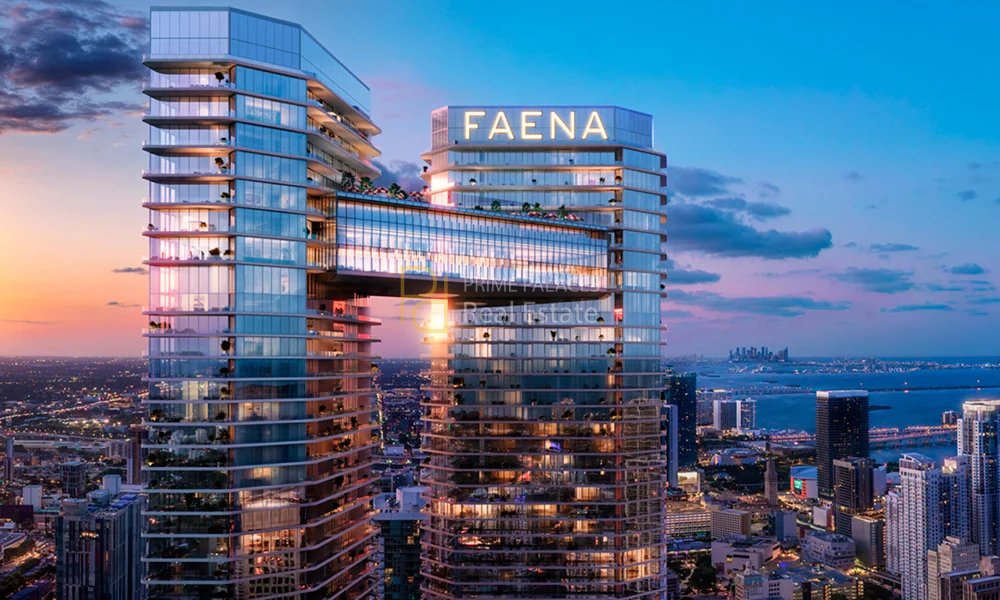





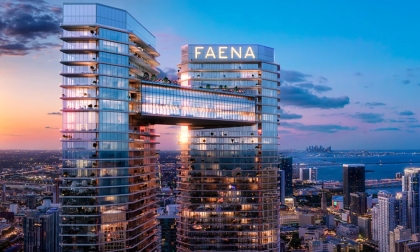
Faena Residences Miami is a new ultra-luxury off-plan residential development positioned along the Miami River, in a location that competes directly with Brickell while offering a different urban narrative built around waterfront living, culture, and architecture. The project is being developed by Fortune International Group and KAR Properties, with architecture by Rafael Viñoly, and is planned as a pair of connected towers rather than a single standalone building. The project contains 434 residences across two 68-story towers, linked by a 45,000-square-foot Sky Bridge, making it one of the most concept-driven residential launches in the current Miami cycle.
What makes Faena Residences Miami strategically important is not only the brand but the way the project is structured. This is not a generic luxury condo with a logo attached. It is being positioned as a branded residential environment shaped by Faena’s identity around art, culture, design, and curated lifestyle programming. That matters in Miami because branded inventory is no longer competing only on finishes or views; it is competing on narrative, buyer identity, and long-term pricing power. In that context, Faena aims to create a stronger emotional and experiential product than a standard high-rise, which is one of the reasons it has attracted early presale momentum.
From an investment perspective, Faena Residences Miami is a higher-conviction, higher-identity product than many competing launches. The location is not as institutionally proven as the absolute core of Brickell, but that is exactly where the upside argument comes from. If the Miami River continues to mature into a true luxury residential corridor, projects with strong brand equity and differentiated architecture should capture more pricing power than interchangeable towers. The fact that the project reportedly generated nearly 100 presales totaling about $300 million by the November 2025 sales launch is a meaningful early demand signal, especially with a buyer mix described as roughly 60% international and 40% domestic.
Faena’s physical concept also matters to the market story. The Sky Bridge is a major experiential and amenity component that supports the project’s identity. That design move gives the development a landmark quality that is easier to remember, easier to market globally, and potentially more defensible in resale conversations. In a market increasingly crowded with branded towers, recognizability is not cosmetic; it is commercial. Buyers paying at this level are not only purchasing square footage. They are buying into perceived scarcity, architectural distinction, and brand-driven cultural positioning.
The project is also important because of timing. Completion is generally projected for around 2029, placing it within the current wave of high-profile Miami delivery cycles. That timeline matters for buyers because it creates exposure to the next major phase of Miami’s luxury supply expansion rather than to an already-completed resale asset.
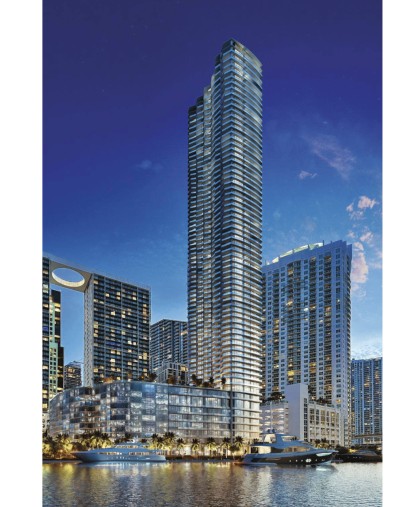
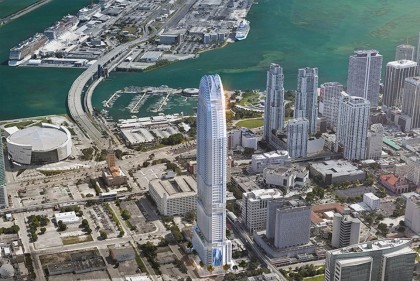
The location profile is one of the project’s strongest selling arguments. It is positioned on the Miami River with fast access to Brickell, Downtown Miami, and the broader urban core, which allows it to function as both a lifestyle purchase and a strategic urban investment. Unlike projects that depend entirely on beachfront appeal, Faena Residences Miami is tied to a more mixed urban-use environment shaped by finance, dining, culture, and city mobility. That gives it a different buyer profile and potentially broader long-term relevance if the riverfront continues to deepen as a luxury district.
Overall, Faena Residences Miami is one of the most important luxury launches Miami property pipeline because it combines a credible development team, a globally legible brand, landmark architecture, and a location with real upside rather than just established prestige. It is not the safest conservative prime play in the market, because the Miami River still has to continue proving itself at the top end. But as a branded off-plan concept with strong differentiation, meaningful presale traction, and a clear identity, it stands out as one of the few launches that looks structurally distinct rather than interchangeable.
Delivery date: Q4 2027